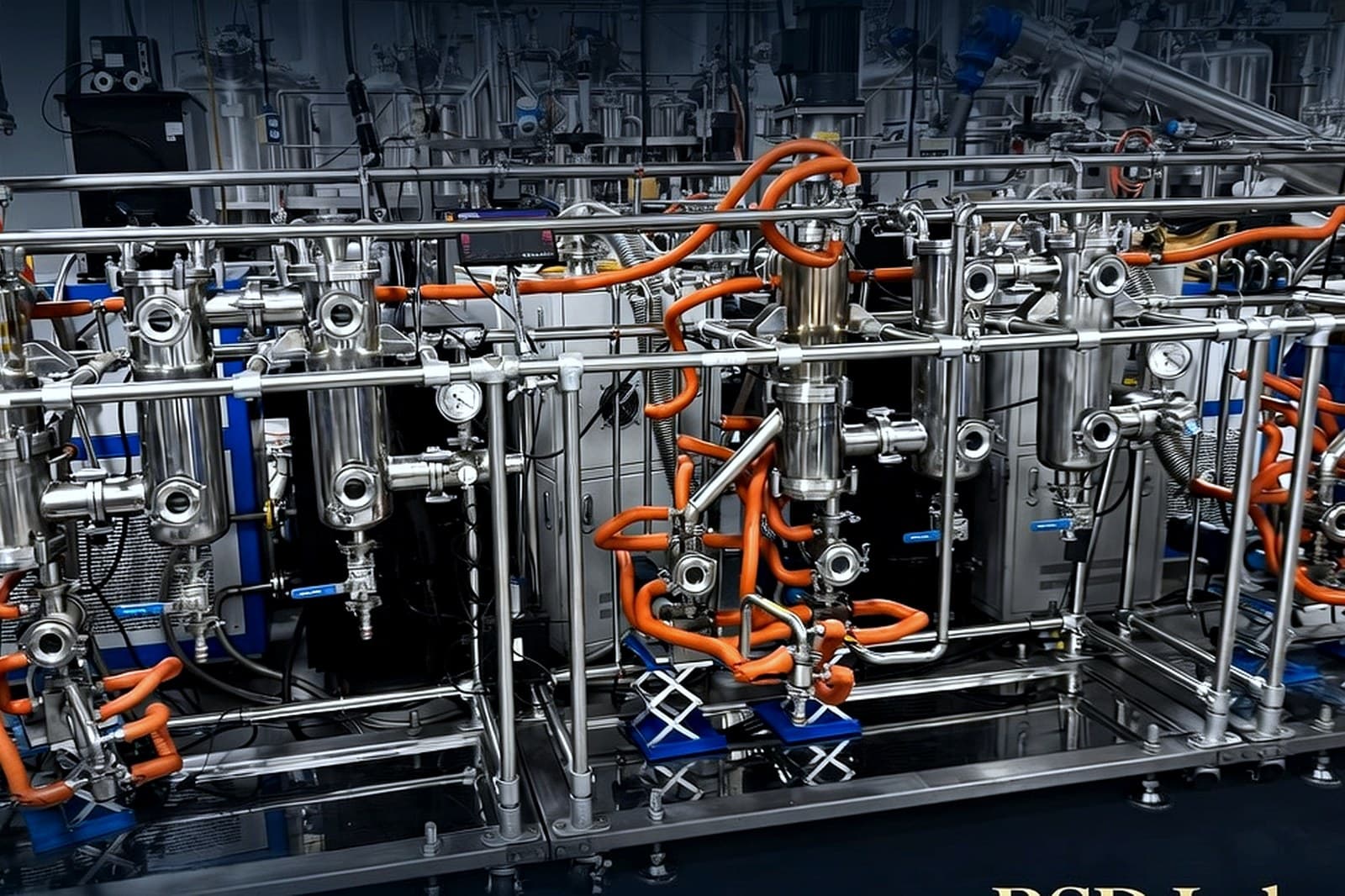
Toll Processing vs. Extraction Services: Which Is Right for Your Minnesota Cannabis Operation
Two models, two very different economics. Here's how to choose the right processing arrangement for your operation — and what questions to ask before signing anything.
If you're a licensed Minnesota cannabis cultivator looking to convert your biomass into high-value extracts, you'll quickly encounter two different business models from extraction facilities: toll processing and full extraction services. On the surface they look similar — you send biomass, you receive extract. But the economics, risk profile, and operational implications are very different.
Understanding the distinction can save you significant money, protect your margins, and determine whether you retain ownership of your product throughout the process. Here's a clear breakdown of both models.
What Is Toll Processing?
Toll processing is a fee-for-service model. You, the cultivator, retain ownership of your biomass and the resulting extract throughout the entire process. You pay the extraction facility a processing fee — the "toll" — in exchange for their labor, equipment, and expertise.
Under a toll processing arrangement:
You own the input biomass. You own the output extract. You pay a flat fee or per-pound rate for processing. The extractor never takes ownership of your material. You decide what to do with the finished extract — sell it wholesale, manufacture products, or further refine it.
Toll processing is ideal for cultivators who want to maintain full control of their supply chain, have established wholesale or retail relationships for their extract, or are building a branded product line. It's also the preferred model for cultivators who have high-quality biomass and want to capture the full value of their harvest rather than selling raw biomass at commodity prices.
What Are Full Extraction Services?
Full extraction services — sometimes called a revenue-share or split model — work differently. The extraction facility processes your biomass and takes a percentage of the resulting extract as their compensation. You receive the remainder.
Under a split or revenue-share arrangement:
You deliver biomass. The extractor processes it and keeps a share of the finished extract as compensation. You receive the remainder. No cash changes hands at the time of processing. You sell your portion of the extract to recoup value.
This model is attractive to cultivators who are cash-constrained and cannot afford upfront processing fees. It's also common early in a cultivator's operation, before they have predictable revenue from extract sales.
The Real Economics: Which Model Costs More?
The conventional industry wisdom is that toll processing always nets the cultivator more than a split, because the cultivator keeps 100% of the output and pays only a fixed fee. That wisdom comes from mature markets where finished distillate sells in the $30–$40/g range. Minnesota in 2026 is not that market. At current MN distillate wholesale pricing, a 50/50 split ties cash toll on dollars, and the split requires no cash up front.
Here's the comparison using BSD Labs's current published rates and 2026 MN distillate market pricing:
Cash toll: $10,000 per kilogram of finished distillate output ($10/g). Cultivator keeps 100% of the distillate.
Split: 50/50 — cultivator keeps 50%, BSD Labs keeps 50%. No cash changes hands.
MN distillate wholesale: approximately $20,000 per kilogram ($20/g) for OCM-licensed, third-party-tested 90%+ THC distillate.
Take 200 lbs of 12% trim. After cryo-ethanol extraction and multi-pass distillation at typical 75–80% recovery on each step, you end up with roughly 7,260 g of finished 90%+ THC distillate.
Under cash toll: cultivator keeps all 7,260 g, pays $72,600 cash up front, sells for 7,260 × $20 = $145,200. Net: $72,600.
Under 50/50 split: cultivator keeps 50% (3,630 g), pays $0, sells for 3,630 × $20 = $72,600. No cash outlay required.
On this run the two paths net the same $72,600. The split's difference is that no cash goes out up front. The crossover — where cash toll starts to beat split on dollars — is at a $20/g distillate sale price. Below $20/g, split wins. At $20/g, they tie. Above $20/g, toll wins. Minnesota's wholesale distillate price has been at that crossover through 2026.
When Cash Toll Still Makes Sense
At the $20/g tie, cash toll still has legitimate uses:
If you have your own brand or product line and want 100% of the distillate output for branded production runs, the 50% under a split may not give you enough volume.
If you have premium-priced direct buyer relationships and you genuinely expect to realize above $20/g for your distillate, the math tips toward toll.
If you have substantial cash and you'd rather hold inventory than convert to cash via a split, toll preserves more inventory in your hands.
If you're in your first season with unpredictable yield or uncertain biomass quality, a split transfers some of the yield risk to the processor — that's a feature, not a bug.
For most established cultivators in MN's current 2026 market without those specific situations, the split is the cleaner deal: same dollars at $20/g, and no working-capital requirement. We covered this in detail with worked numbers in our cultivator economics post.
Questions to Ask Any Minnesota Extraction Facility
Regardless of which model you pursue, ask these questions before signing a processing agreement with any Minnesota cannabis extractor:
Are you OCM licensed? Only licensed Minnesota cannabis manufacturers can legally process adult-use cannabis biomass. Verify license status directly with the OCM registry.
What is your chain-of-custody process? Your biomass must be tracked from delivery through processing under OCM seed-to-sale tracking requirements. Ask for documentation of their custody procedures.
What extraction method do you use? Cryo-ethanol, hydrocarbon, and solventless each produce different products. Make sure their capabilities match your target output.
Who provides COA testing? Under toll processing, you typically arrange testing. Under some split agreements, the extractor handles it. Clarify who submits samples and who pays for testing.
What is your minimum batch size? Some facilities have minimums that may not suit smaller cultivators.
What is your turnaround time? Given Minnesota's testing backlog, ask about total time from biomass delivery to finished, tested extract in your hands.
BSD Labs: Both Models, One OCM-Licensed Facility
BSD Labs in Waseca, MN offers both cash-toll processing ($10,000 per kilo of finished distillate output) and 50/50 split arrangements for licensed Minnesota cannabis cultivators. We work with you to model out the economics of both options for your specific biomass quality, volume, and cash flow situation before you commit to anything.
Our commercial-scale facility handles cryo-ethanol extraction, full winterization and filtration, distillation, and vape cart manufacturing — so whether you're converting biomass to crude, crude to distillate, or distillate to finished vape cartridges, we can handle the full production chain under one roof. We also broker or buy back distillate output for cultivator partners on a case-by-case basis if you don't already have a path to selling your share.
Ready to discuss your 2026 processing needs? Contact BSD Labs to schedule a consultation.
Minnesota-licensed extraction, distillation, vape cart manufacturing, and wholesale distribution.
Get In Touch